
HUD Rule Requires Status Checks for Every Assisted Tenant
HUD's final rule, effective Dec. 14, requires citizenship or immigration status checks for all members of assisted households and ends ongoing prorated aid.

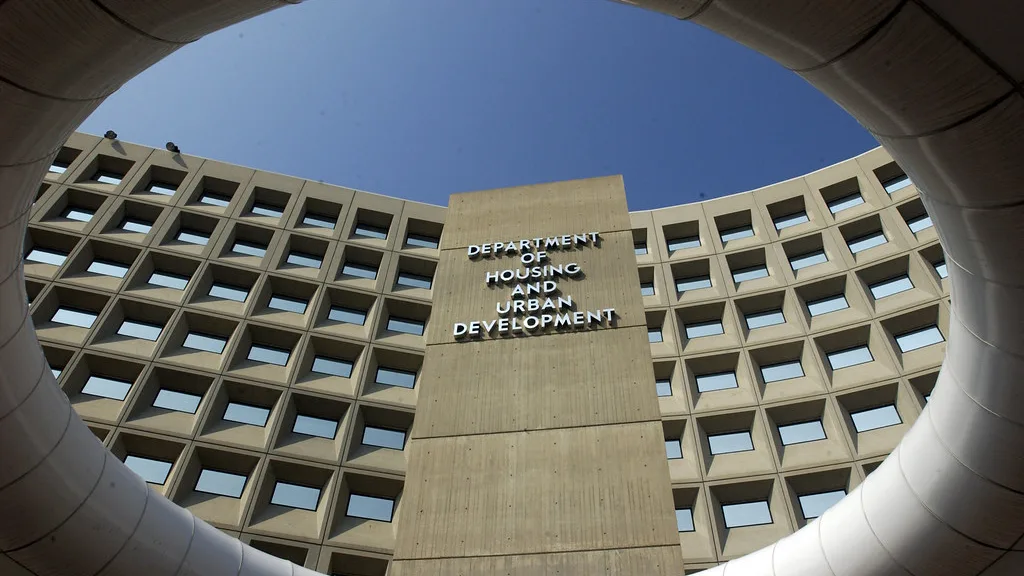
HUD headquarters, the Robert C. Weaver Federal Building, in Washington, D.C. Photo: U.S. Department of Housing and Urban Development via Flickr, Public domain (cropped)
Key points
- HUD's final Verification of Eligible Status rule takes effect December 14, 2026, for public housing, Section 8 and several other programs.
- Every household member must have citizenship or eligible immigration status verified regardless of age, and prorated aid for mixed families becomes temporary.
- Current mixed-status households have until March 14, 2027, to submit evidence, with up to 60 more days in some cases and hearing rights before any termination.
In this article
The U.S. Department of Housing and Urban Development has finalized a rule that will require every person in a household receiving certain federal rental assistance, including children and older adults, to have their U.S. citizenship or eligible immigration status verified. The rule was published in the Federal Register on November 12 and takes effect December 14, 2026, according to a legal alert from the law firm Ballard Spahr.
What the rule does
HUD announced the final "Verification of Eligible Status" rule on November 10. According to the rule text, it requires verification of citizenship or eligible immigration status for all applicants and recipients of assistance in covered programs regardless of age, and it makes prorated assistance for "mixed" families temporary.
Mixed families are households in which some members are eligible and others are not. Under the long-standing system, such households could keep receiving a reduced, prorated subsidy that covered only eligible members. Under the final rule, Ballard Spahr says, prorated assistance is available only while the status of other household members is still being verified.
The rule also removes an exemption that allowed people 62 and older to sign a declaration in place of fuller verification, and it ends the option for a household member to decline to claim eligible status, according to the firm's summary.
Which programs are covered
According to Ballard Spahr, the rule applies to:
- Public housing
- Section 8 assistance, such as tenant-based and project-based vouchers, Moderate Rehabilitation units and project-based rental assistance contracts
- Section 236 properties, for tenants paying below-market rent
- Housing Development Grant properties, for low-income units
Who checks status, and how
Public housing agencies and owners of assisted properties will handle verification, using the Department of Homeland Security's SAVE system. Private landlords who rent to tenants with vouchers are not responsible for checking immigration status, the firm notes.
For U.S. citizens, the standard paperwork is a signed declaration, a Social Security number and a signed consent form. Citizenship documents are needed only if the electronic check cannot confirm status and the agency or owner sends a written notice asking for more, in which case the person generally has 30 days to respond.
Key deadlines
- By January 11, 2027: agencies and owners must notify tenants who have not yet submitted evidence.
- By March 14, 2027: current tenants in mixed-status families must submit evidence, within 90 days of the effective date. Extensions of up to 60 days must be granted in some cases, for a maximum of 150 days.
- Other current tenants: verification happens at the household's next annual or interim reexamination after December 14.
- Applicants and new household members: verification happens when other eligibility factors are checked.
Protections that remain
According to the Ballard Spahr summary, assistance cannot be delayed, denied, reduced or ended while verification is pending, and it cannot be ended before a family completes the informal hearing process, which must be requested within 30 days of a denial or termination notice. Families that no longer qualify may receive temporary deferrals of termination in six-month blocks, up to 18 months in total. Refugee and asylee families are exempt from those time limits but must still complete verification.
HUD's reasoning and the debate
In its announcement, HUD said a joint audit with DHS of HUD-assisted households found nearly 200,000 tenants whose eligibility verification was incomplete or unknown, and that federally funded housing reaches only about a quarter of eligible households in need. HUD Secretary Scott Turner said in the release that "American taxpayers will no longer foot the bill."
In the rule's preamble, HUD says mixed families are a small, shrinking share of assisted households, under 1%, and are concentrated in California, Texas and New York. Its analysis estimates that about 19,810 mixed families would be eligible for temporary deferral of termination and says it expects most households without required documents to leave assisted housing voluntarily rather than contest the change. Commenters on the proposed version raised concerns about households with U.S.-citizen children, seniors and other eligible members who could be affected by a determination about a relative, according to the same document.
What this means for renters
- Watch for notices. If you live in public housing or use a voucher, read any letter from your housing authority or property manager closely and note the deadline.
- Gather documents early. Have Social Security cards, birth certificates, passports or immigration papers for every household member ready in case a follow-up request arrives.
- Ask for an extension in writing if a document is temporarily unavailable, and keep copies of everything you submit.
- Use your hearing rights. If you receive a denial or termination notice, request an informal hearing within 30 days and contact a local legal aid office or fair housing group for help.
Voucher holders asked for immigration papers by a private landlord can point out that, under the rule, verification is handled by housing agencies and owners of assisted properties, not by landlords who accept vouchers.
Sources
Gear that could help
Affiliate linksPractical items related to this story, picked by our editors.
As an Amazon Associate, Renter News earns from qualifying purchases.
Turn a renewal offer into a percentage, a monthly and a yearly cost, and compare it with a cap you enter.
Related stories
More Housing Policy
NYC Rent Freeze Takes Effect as Landlord Lawsuit Moves Ahead
New York City's rent freeze on about 1 million stabilized apartments began Oct. 1, while a landlord lawsuit continues. What stabilized tenants should know.

New HUD Fair Market Rents Take Effect, Changing Voucher Limits
HUD's fiscal 2027 Fair Market Rents took effect Oct. 1, with a 2% weighted-average increase that resets how much rent Section 8 vouchers can cover.

New Bedford Apartment Fire Displaces 10; Oily Rags Suspected
A Sunday night fire in a vacant third-floor unit on Nash Road in New Bedford, Mass., displaced 10 people. Early findings point to improperly stored oily rags.