
San Francisco Bars Evictions Over Small Rent Debts Starting Nov. 29
New San Francisco law blocks nonpayment evictions unless a tenant owes more than one month of HUD fair market rent, such as $3,003 for a one-bedroom unit.

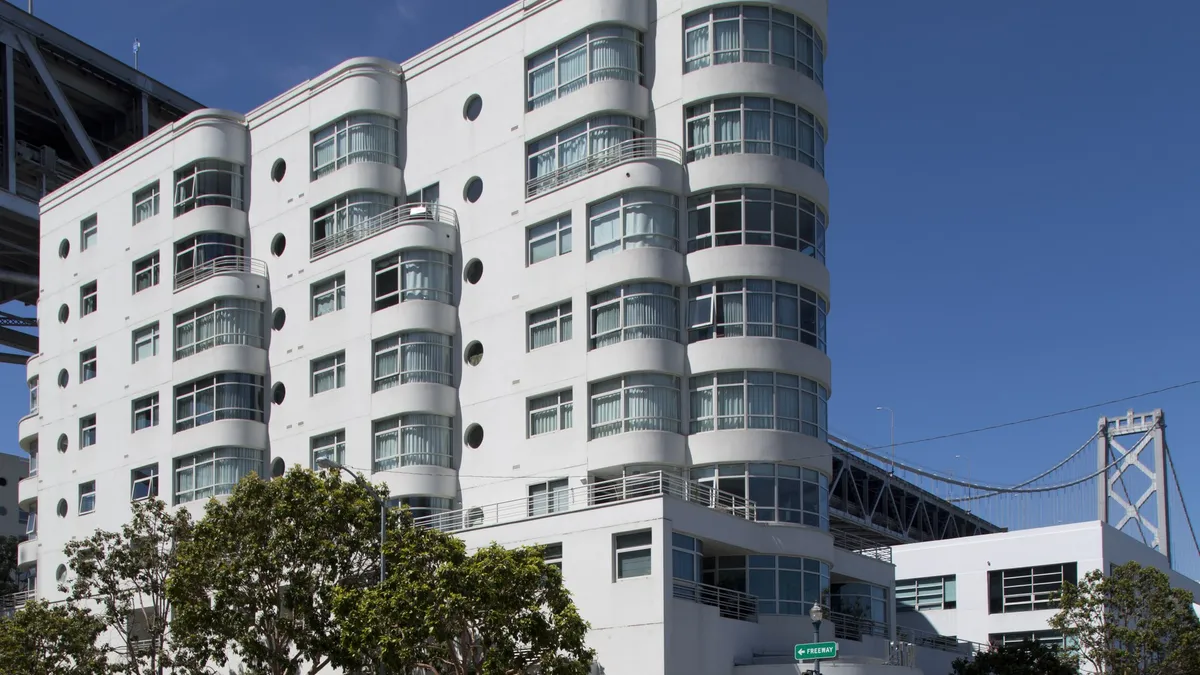
An apartment building near the Bay Bridge in San Francisco (file photo). Photo: Carol M. Highsmith / Library of Congress via Wikimedia Commons, Public domain
Key points
- Starting Nov. 29, San Francisco landlords cannot evict for unpaid rent unless the debt exceeds one month of HUD fair market rent for the unit's size.
- The thresholds range from $2,574 for a studio to $5,439 for a four-bedroom; the law does not cancel the debt, and landlords can still sue to collect it.
- A companion law requiring listings and leases to show a total estimated monthly cost, including mandatory fees, begins Jan. 1, 2027.
In this article
Beginning Sunday, November 29, landlords in San Francisco will no longer be able to evict a tenant for falling a little behind on rent. Under a new city ordinance, an eviction for nonpayment can move forward only when the amount owed is greater than one month of the federal government's fair market rent for an apartment of the same size.
What the law does
The ordinance was introduced in September by Supervisor Jackie Fielder, approved by the Board of Supervisors in October and signed by Mayor Daniel Lurie on October 29, according to KQED and other coverage. It ties the eviction cutoff to the fair market rent (FMR) figures the U.S. Department of Housing and Urban Development publishes each year, which are normally used to set limits for federal housing vouchers.
Using HUD's fiscal year 2027 figures for San Francisco, a tenant must owe more than the following before a nonpayment eviction can begin:
- Studio: $2,574
- One bedroom: $3,003
- Two bedrooms: $3,697
- Three bedrooms: $4,832
- Four bedrooms: $5,439
KQED offered a simple example: because the two-bedroom figure is $3,697, a tenant in a two-bedroom unit who owes $2,000 could not be evicted on that basis alone. Because the cutoff depends on unit size, an eviction notice must state how many bedrooms the unit has.
What it does not do
The law is not rent forgiveness. Its text states that the threshold does not relieve tenants of their duty to pay rent, and landlords keep the right to pursue unpaid balances through other legal means. Once a tenant's debt rises above the threshold, a nonpayment eviction is again an option. Renters who are behind should not read the ordinance as a reason to stop paying.
Why the city acted
Supporters argued that a short-term shortfall, such as a late paycheck or an unexpected bill, should not cost someone a home, particularly long-time tenants who would face far higher rents if forced to move. KQED reported that landlords filed 1,488 eviction notices in the 12 months ending in February 2026, the highest annual count since before the pandemic, with roughly a quarter tied to unpaid rent. Lurie has described the city's housing situation as a rent emergency.
A legal question still pending
San Francisco is not the first California city to set a minimum debt for nonpayment evictions. Los Angeles has a similar rule requiring unpaid rent to reach at least one month of fair market rent. In August, the California Supreme Court agreed to hear Apartment Association of Los Angeles County v. City of Los Angeles, limited to whether the state's unlawful detainer law preempts that local threshold. A state appeals court had upheld the Los Angeles rule. A ruling against it could raise questions about San Francisco's version as well, as the San Francisco Inquirer noted when the board took up the measure.
A second law on fees arrives in January
Lurie signed a companion measure from Supervisor Bilal Mahmood the same day. Starting January 1, 2027, qualifying online listings and new leases must display a "Total Estimated Monthly Cost" that combines base rent with recurring mandatory charges, shown in the same size type as the rent and with fees itemized. Tenants may be protected from eviction over charges that were not properly disclosed, so renters should save copies of listings and leases.
What renters should do
- Know your number. Find your unit's bedroom count on your lease and compare any balance owed to the threshold above.
- Read every notice carefully. A nonpayment notice should list your unit's bedroom count. If the amount claimed is under the threshold, contact a tenant counselor or attorney.
- Keep paying what you can, and keep records. The debt does not disappear, and a growing balance can cross the threshold.
- Get help early. San Francisco tenants can reach the city's Rent Board and local tenant organizations for free counseling.
For background on another state-level fight over rents, see our coverage of California's emergency rent caps.
Sources
Gear that could help
Affiliate linksPractical items related to this story, picked by our editors.
As an Amazon Associate, Renter News earns from qualifying purchases.
Work out the last day to give move-out notice for your lease and add a reminder to your calendar.
Related stories
More Tenant Rights
California Extends Emergency Rent Caps to Long-Term Leases
Gov. Newsom signed SB 1365, which brings leases longer than one year under California's 10% emergency price-gouging cap starting Jan. 1, 2027.

Landlord Repair Duties and the Warranty of Habitability
What the warranty of habitability means, how to request repairs in writing, and why withholding rent without following your state's rules can backfire.

Judge Pauses New York's Ban on Rent-Setting Algorithms
A federal judge blocked part of New York's law banning landlords from setting rents with algorithmic software like RealPage. Here's what it means for tenants.