
Rents Tick Up for First Time Since 2023 as New Supply Slows
Realtor.com says the median asking rent in the 50 largest metros rose 0.1% from a year ago in October to $1,692, the first annual gain since June 2023.

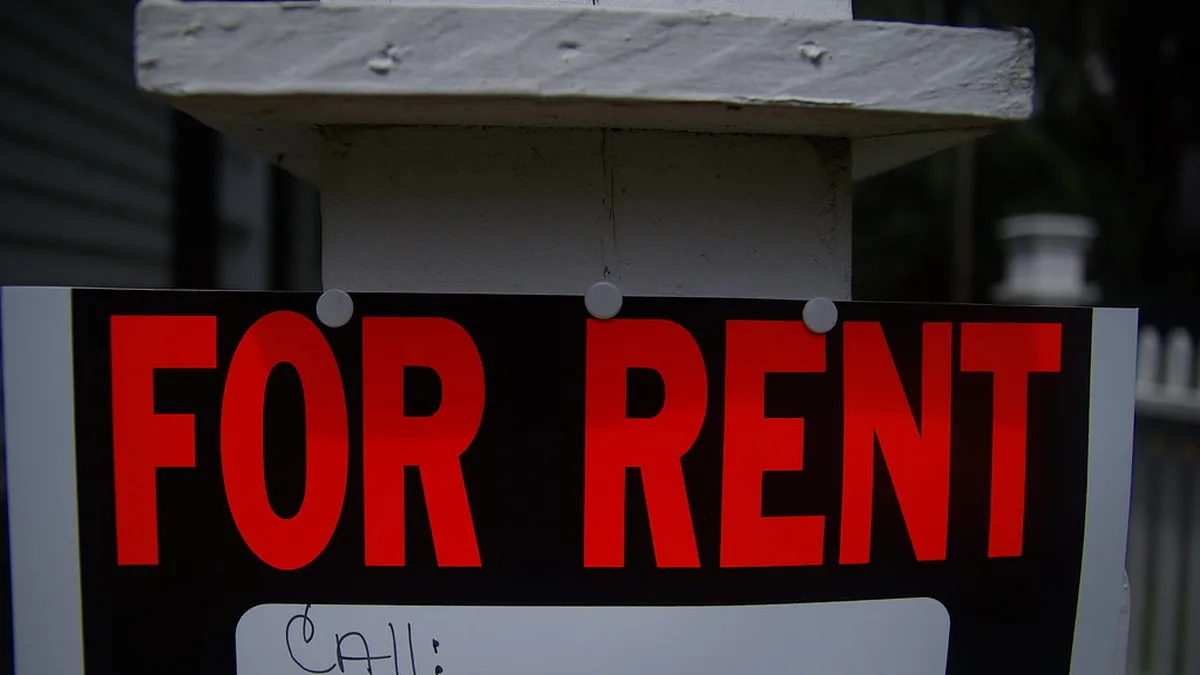
A For Rent sign (file photo). Photo: Charleston's TheDigitel / Flickr / CC BY 2.0. Cropped.
Key points
- The median asking rent across the 50 largest US metros was $1,692 in October, up $1 (0.1%) from a year earlier, according to Realtor.com.
- It is the first year-over-year increase in that measure since June 2023, as completions of new apartment buildings fell 26% in the third quarter.
- San Francisco and San Jose posted the biggest gains, while San Antonio, Tampa, Nashville and Houston saw the largest declines.
In this article
After more than three years of flat-to-falling prices, asking rents in the country's biggest metro areas have edged back above where they were a year earlier. Realtor.com's October rent report, released Nov. 18, puts the median asking rent for studios, one-bedrooms and two-bedrooms across the 50 largest US metros at $1,692 a month. That is just $1 more than in October 2025, an increase of 0.1%, but it is the first year-over-year gain the company has recorded since June 2023.
The numbers
The turn is small, and it doesn't mean rents are soaring. The national median remains $82, or 4.6%, below its August 2022 peak. It is still about 15% higher than in October 2019, before the pandemic reshaped the rental market.
Results varied by apartment size:
- Two-bedrooms: $1,889, up 0.3% from a year earlier.
- One-bedrooms: $1,566, up 0.1%, the first annual increase for that size since June 2023.
- Studios: $1,411, down 1.2%. Studios have now posted annual declines for 39 straight months, according to MortgagePoint's summary of the report.
Why rents are turning
Realtor.com ties the shift to the end of the apartment building boom. From 2023 through 2025, developers finished roughly 1.5 million apartments in larger multifamily properties (five units or more), a wave that gave renters more choices and forced landlords to compete with concessions and flat pricing. That pipeline is now shrinking: third-quarter 2026 completions ran at a seasonally adjusted annual rate of 330,000 units, down 26% from a year earlier and nearly half the peak pace. Units under construction and new starts also fell year over year.
With fewer new buildings opening, there is less downward pressure on rents. Realtor.com senior economist Jiayi Xu also pointed to high borrowing costs, which can keep would-be buyers in the rental market longer and add to demand. Xu stressed that, even with rents below their peak, affordability for tenants remains far tougher than it was before 2020.
Where rents rose and fell
The Bay Area led the country. Asking rents rose 6.3% year over year in the San Francisco metro, to a median of $3,094, and 6.2% in the San Jose metro, to $3,540. Milwaukee (up 4.1%), Chicago (up 3.2%) and St. Louis (up 3.2%) rounded out the top gainers.
The Sun Belt, where much of the new construction landed, still leaned the other way. San Antonio posted the steepest drop at 3.7%, bringing its median to $1,117. Tampa fell 2.3%, Nashville 2.1% and Houston 1.9%. Austin was down 0.9%, a much smaller decline than the 7% drop it posted a year earlier. Los Angeles, Denver and Phoenix also remained slightly negative.
Regionally, the Northeast saw completions plunge almost 50%, the sharpest pullback in the country, which could limit relief for renters there in 2027.
How this compares with other rent data
Different trackers measure rent in different ways, so their headline numbers do not line up. Realtor.com tracks asking rents on listings in the 50 largest metros, including condos, townhomes and single-family homes as well as apartments. Apartment List, which uses its own methodology, reported a national median of $1,384 for October, also up 0.1% from a year earlier and its first positive annual reading in more than three years. The two series agree on the direction even though the dollar figures differ. Neither measures what existing tenants pay on current leases, which tends to change more slowly.
What this means for renters
For most tenants, a 0.1% national change is not something they will feel at renewal time. But the report suggests the renter-friendly market of the last two years is fading, particularly in metros where little new housing is coming online.
- If your lease is up soon, check current asking rents for comparable units nearby before you accept a renewal offer. In many Sun Belt metros, prices are still below last year's.
- Ask about concessions such as a free month or waived fees. They are becoming less common as supply tightens, but many newer buildings still offer them.
- In fast-rising markets like the Bay Area, Chicago and Milwaukee, consider locking in a longer lease if your landlord offers a stable rate.
- Budget for the total cost, including fees, parking and utilities, not just base rent. Our rent affordability calculator can help.
Rent data for Buffalo, Providence, Rochester, New Orleans and San Diego was not included in October's report while Realtor.com reviews it.
Sources
Gear that could help
Affiliate linksPractical items related to this story, picked by our editors.
As an Amazon Associate, Renter News earns from qualifying purchases.
Find a comfortable rent from your income and debts using the 30% rule, the 50/30/20 budget and the 40x landlord income test.
Related stories
More Rent & Market
Zillow: Rent Growth Speeds Up to 2.7% as Mortgage Rates Climb
Zillow's September report shows typical U.S. rent at $1,932, up 2.7% from a year ago, as high mortgage rates keep would-be buyers in the rental market.

San Francisco Rents Surge While Texas Metros Keep Falling
Fall rent reports show San Francisco leading the nation in rent growth while San Antonio, Denver, Houston and Las Vegas see flat or falling prices for tenants.

Apartment Vacancy Falls to 7% as Rent Market Shows Rebound Signs
Apartment List says vacancy fell to 7% in September and rents dipped only 0.1%, a smaller seasonal drop hinting that the renter-friendly market is cooling.