
NY High Court Upholds Ban on Section 8 Voucher Discrimination
New York's Court of Appeals ruled 4-3 that the state's source-of-income protections for voucher holders are not unconstitutional, reviving paused complaints.

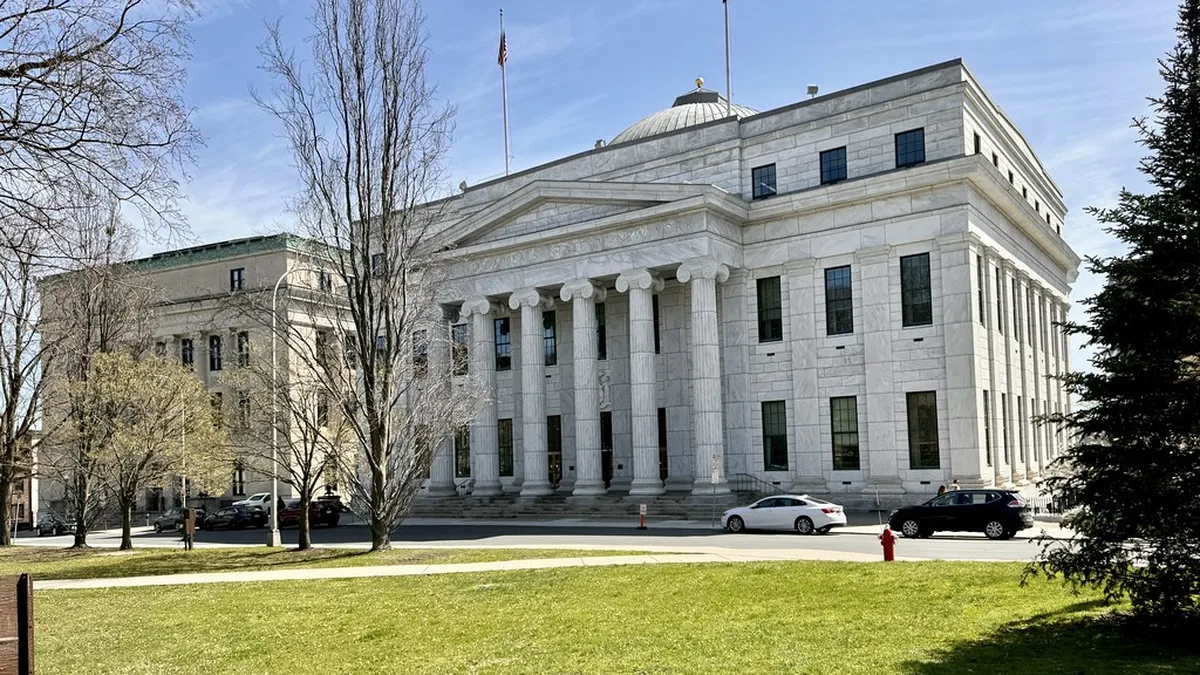
The New York Court of Appeals building in Albany. Photo: w_lemay / Flickr, CC BY-SA 2.0.
Key points
- New York's Court of Appeals ruled 4-3 on Monday, Nov. 23, that the state law barring landlords from turning away tenants who pay with housing vouchers is not facially unconstitutional.
- The decision reverses a March appellate ruling that sided with an Ithaca landlord and had effectively paused voucher discrimination claims across the state.
- The landlord's lawyer said a U.S. Supreme Court appeal is possible, and the ruling leaves room for narrower challenges, but tenants can again file complaints.
In this article
Renters in New York who pay part of their rent with a Section 8 voucher or other housing subsidy won an important legal victory this week. On Monday, Nov. 23, the state's highest court ruled 4-3 that New York's ban on discrimination based on a tenant's lawful source of income does not violate landlords' constitutional rights.
What the court decided
The Court of Appeals reversed a March decision by the Appellate Division in Albany that had sided with Ithaca landlord Jason Fane, according to Central Current and City Limits. That lower-court ruling had effectively put voucher discrimination complaints on hold statewide, City Limits reported.
The case began in 2022, when Attorney General Letitia James sued Fane and his companies after renters said they were turned away for using vouchers. Fane's defense centered on the federal Section 8 program's requirement that apartments pass a housing quality inspection. He argued that forcing landlords to accept vouchers effectively forces them to allow warrantless government inspections, in violation of the Fourth Amendment.
Chief Judge Rowan Wilson, writing for the majority, rejected that reasoning, describing the landlord's theory as "extraordinary and unprecedented." The majority found that the state's Human Rights Law requires only that landlords not discriminate based on how a tenant pays, and does not itself require anyone to submit to a search. Judge Michael Garcia wrote in dissent that compelling landlords to consent to inspections in this way does infringe on their Fourth Amendment rights.
What it does and does not settle
The ruling addressed what lawyers call a facial challenge, meaning a claim that a law is unconstitutional in every situation. By rejecting that claim, the court restored the law statewide. Advocates cautioned to City Limits that landlords may still try narrower arguments that a particular inspection amounts to an unlawful search.
Fane's lawyer, Curtis Johnson, told City Limits his client disagrees with the decision and is weighing next steps, which could include asking the U.S. Supreme Court to take up the case.
Who it affects
Central Current, citing program data, reported that roughly 528,600 New York residents rely on Section 8 assistance. Under the program, voucher holders generally pay about 30 percent of their income toward rent, with the subsidy covering the rest up to a set limit.
Discrimination remains common, advocates say. CNY Fair Housing told Central Current that source-of-income complaints are its second most frequent type, making up about 15 percent of its caseload. One voucher holder told City Limits he had inquired about more than 2,000 apartments without landing one.
In New York City, Mayor Zohran Mamdani announced that the city's Commission on Human Rights will refer real estate brokers who violate source-of-income rules to the state Department of State, which licenses them, City Limits reported. Legal aid attorneys urged state and city agencies to move quickly on complaints that piled up while the law was in limbo.
What this means for renters
If you use a voucher or other rental subsidy in New York, a landlord, broker or management company generally cannot refuse to rent to you, advertise "no Section 8," or set different terms because of how you pay. Practical steps:
- Keep records of every listing you contact, including screenshots of ads, texts and emails, and notes on phone calls with dates and names.
- Watch for "ghosting." Landlords who stop responding once a voucher is mentioned are a frequent complaint; a pattern across several inquiries can support a claim.
- File a complaint with the New York State Division of Human Rights, or in New York City with the Commission on Human Rights. Complaints against licensed brokers can also go to the Department of State.
- Get help. Local fair housing groups and legal aid offices can review your situation for free and may run testing to document discrimination.
Renters in other states should check their own laws: source-of-income protections vary widely, and some cities and counties have them even where the state does not.
Sources
Gear that could help
Affiliate linksPractical items related to this story, picked by our editors.
As an Amazon Associate, Renter News earns from qualifying purchases.
Work out the last day to give move-out notice for your lease and add a reminder to your calendar.
Related stories
More Tenant Rights
California Extends Emergency Rent Caps to Long-Term Leases
Gov. Newsom signed SB 1365, which brings leases longer than one year under California's 10% emergency price-gouging cap starting Jan. 1, 2027.

Landlord Repair Duties and the Warranty of Habitability
What the warranty of habitability means, how to request repairs in writing, and why withholding rent without following your state's rules can backfire.

Judge Pauses New York's Ban on Rent-Setting Algorithms
A federal judge blocked part of New York's law banning landlords from setting rents with algorithmic software like RealPage. Here's what it means for tenants.