
E-Bike Battery Fire Forces Ithaca to Vacate Three Apartment Floors
After an e-bike battery fire at Ithaca's Asteri building, the city ordered three floors vacated. A day earlier, sprinklers contained a similar Santa Rosa fire.

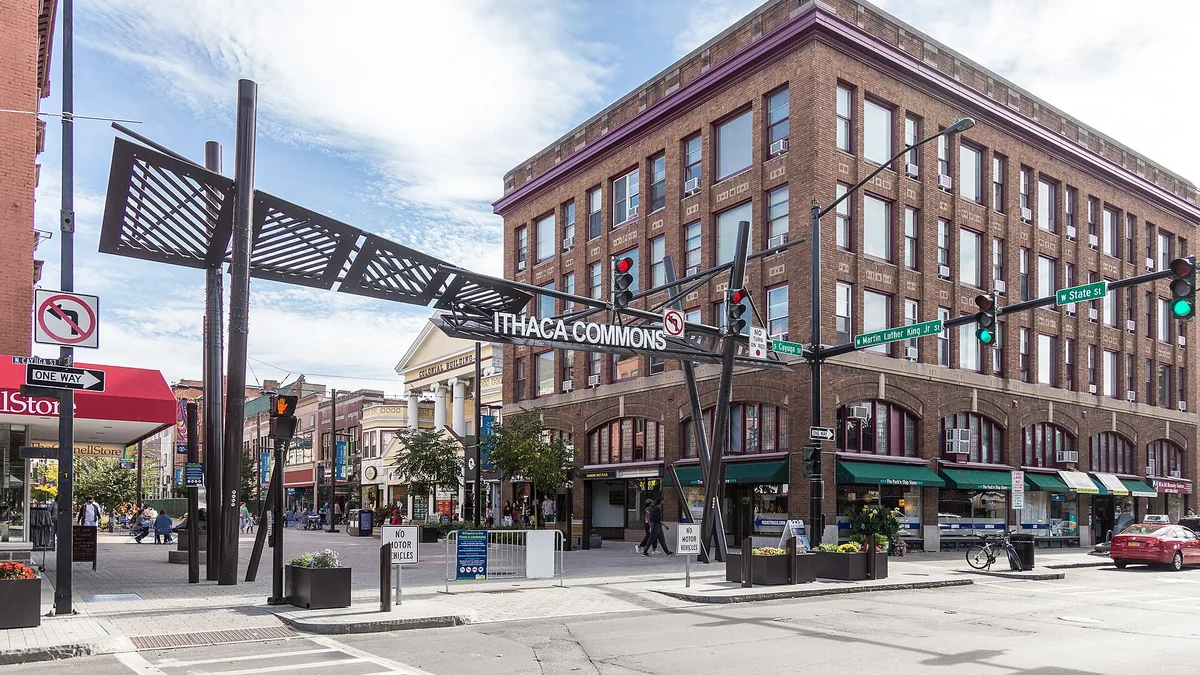
File photo of the Ithaca Commons in downtown Ithaca, near the Asteri building. Photo: Kenneth C. Zirkel / CC BY-SA 4.0
Key points
- Ithaca ordered residents off the fourth, fifth and sixth floors of the Asteri building, 118 E. Green St., after a Nov. 19 fire that began with an e-bike battery.
- Firefighting water carried battery debris into sixth-floor apartments and damaged electrical panels serving the two floors below, leaving exits without emergency lighting.
- In Santa Rosa, California, two sprinklers confined a Nov. 18 e-bike battery fire to one room; four adults escaped unhurt.
In this article
The City of Ithaca, New York, ordered residents off three floors of a downtown apartment tower on Thursday, Nov. 19, after a fire that city officials say began with an e-bike battery left the building with contaminated water and damaged electrical equipment. It applies to floors four through six of the Asteri, a residential tower at 118 E. Green St., and will stay in place until the hazards are fixed.
The Ithaca fire came one day after charging e-bike batteries sparked a separate apartment fire in Santa Rosa, California, where automatic sprinklers kept the damage to a single room. Together, the two incidents show how a lithium-ion battery failure can upend renters' lives even when the flames themselves are put out quickly.
What happened in Ithaca
According to the city, Thursday morning's fire began when an e-bike battery failed in one of the building's sixth-floor units. The Ithaca Fire Department put it out, but the water used to fight the fire picked up battery debris and other contaminants and carried them into the sixth-floor hallway and neighboring apartments. City officials said water that has come into contact with e-bike battery debris poses chemical, environmental and physical hazards.
Water also reached the floors below, where it damaged electrical panels serving the fourth and fifth floors. The city said those panels created a serious risk of electric shock and shut off power to both floors. With the electricity off, exit routes lost their lighted exit signs and emergency lighting, and apartments were left without lights or ventilation.
The city's code enforcement director, acting for the planning and development director, determined that the conditions were an immediate threat to residents and issued the vacate order effective at once. The order does not apply to the building's other residential floors or to the conference center next door at 116 E. Green St.
Who is affected and what happens next
The city has not said how many people were displaced, and none of the reports reviewed by Renter News described any injuries. The property owner, Vecino Group, is responsible for correcting the hazards, and the city said it is working with the owner and community partner agencies on safely relocating the residents who had to leave.
It is the second time this year that city officials have ordered residents out of the Asteri building. In early March 2026, Ithaca ordered floors four through 11, a total of 181 housing units, vacated after firefighters responding to an alarm found broken and missing windows in both stairwells, which serve as the building's only emergency exits, according to WBNG-TV. Officials said at the time that the damaged stairwells no longer met code as protected exits.
A sprinkler-contained fire in Santa Rosa
In Santa Rosa, firefighters were called to a three-story apartment building in the 2000 block of Zinfandel Avenue early Wednesday, Nov. 18. The Press Democrat put the time at about 5:15 a.m., while Bay City News, citing the fire department, said the call came in just before 5:30 a.m.
Crews arrived to find smoke and activated sprinklers. Two sprinkler heads had already knocked down most of the fire and kept it confined to the room where it started, and firefighters finished the job in about 10 minutes. Inspectors determined that two e-bike batteries charging inside the apartment caused the fire.
Four adults who were home escaped through the front door and a bedroom window, and no one was hurt. Smoke alarms were working, the Press Democrat reported. The Santa Rosa Fire Department estimated damage to the building at $86,000, and the American Red Cross was called to help the displaced residents.
Why battery fires are different
Lithium-ion batteries in e-bikes and scooters store a lot of energy in a small package. When a cell is damaged, defective or overcharged, it can overheat and ignite in a chain reaction that spreads from cell to cell, often with little warning. These fires can flare up suddenly, give off toxic smoke and reignite after appearing to be out. As Ithaca's order shows, the cleanup can also be hazardous: debris from a burned battery can contaminate the water used to fight the fire.
The Santa Rosa fire is a reminder of what working fire protection can do. Sprinklers held the fire to one room and working smoke alarms gave the occupants time to get out. Not every apartment building has sprinklers, especially older ones, so renters should not count on them.
What this means for renters
- Charge with care. Use the charger that came with the bike or one approved by the manufacturer, charge where you can keep an eye on it, and unplug when the battery is full. Avoid charging overnight or while you are away.
- Keep exits clear. Do not park or charge an e-bike in a hallway, by the front door or anywhere it could block your way out if it catches fire.
- Watch for warning signs. Stop using a battery that is swollen, leaking, unusually hot, hissing or giving off a strange smell, and never use a battery that has been dropped or damaged.
- Buy certified equipment. Look for e-bikes and batteries tested to a recognized safety standard, such as UL 2849 for e-bike electrical systems.
- Read your lease. Some landlords restrict where e-bikes can be stored or charged.
- If an order to vacate affects you, keep copies of any notices, ask your landlord in writing about rent and relocation help while the unit is closed, and check whether your renters insurance includes loss-of-use coverage for temporary housing.
For more on preventing these fires, see our guide to lithium-ion battery fires in apartments, and our checklist for the first 72 hours after a fire.
Sources
Gear that could help
Affiliate linksPractical items related to this story, picked by our editors.
As an Amazon Associate, Renter News earns from qualifying purchases.
An interactive checklist that scores your apartment's fire readiness and tells you what to fix first.
Related stories
More Fire
Patio Grill Fire Displaces at Least 15 at North Naples Apartments
A grill left too close to flammable items started a Nov. 18 fire at a North Naples, Florida, complex, damaging 12 units and displacing at least 15 residents.
South Huntsville Apartment Fire Destroys 16 Units
An early fire at a South Huntsville apartment complex on Meadowbrook Drive displaced residents of 16 units on Oct. 6, the area's second such fire in 10 days.

Somerville Five-Alarm Fire Displaces 43 in Teele Square
A five-alarm fire tore through a mixed-use building in Somerville's Teele Square on Sept. 30, displacing 43 residents from 32 homes. A relief fund is open.