
Bloomington Apartment House Fire Displaces All Five Units
An early Friday fire tore through a converted three-story apartment house on East Locust Street in Bloomington, Illinois. Smoke alarms got everyone out.

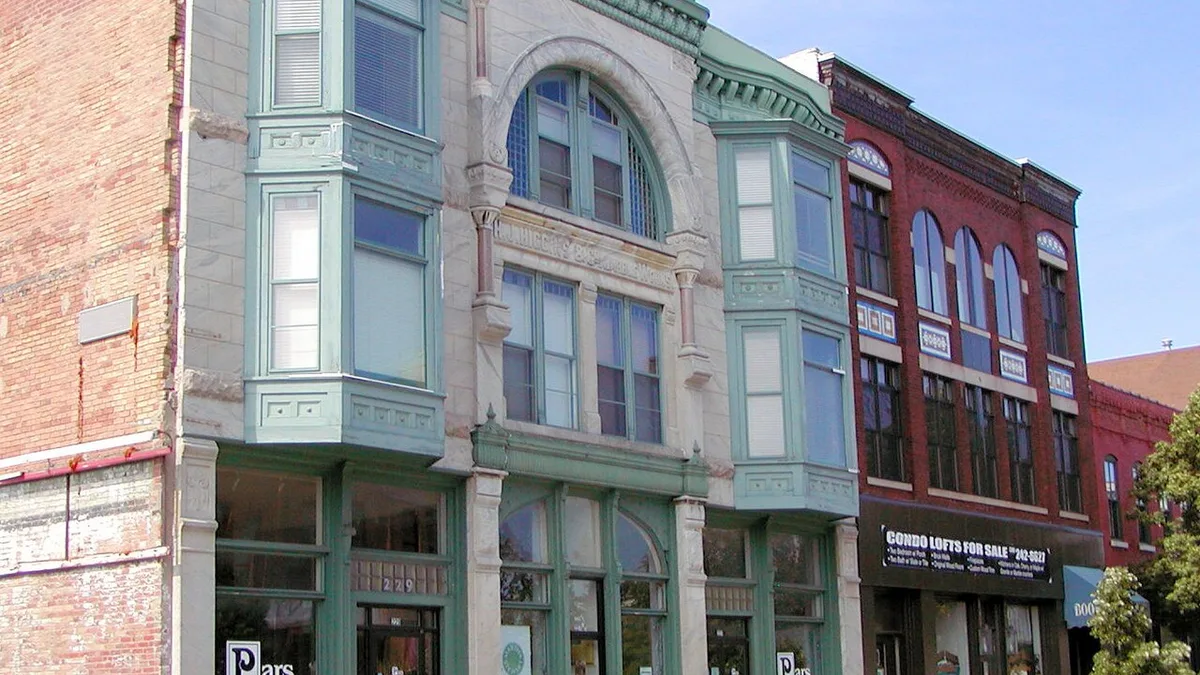
Historic storefronts in downtown Bloomington, Illinois (file photo; not the building that burned). Photo: William Wesen via Wikimedia Commons, CC BY-SA 3.0 · cropped
Key points
- Fire broke out around 1:30 a.m. Friday, Nov. 13, in a three-story house split into five apartments in the 300 block of East Locust Street.
- Every household in the building was displaced, but no one was hurt after working smoke alarms woke residents.
- The American Red Cross is helping the displaced tenants; the cause and origin remain under investigation.
In this article
Residents of a five-unit apartment house near downtown Bloomington, Illinois, are looking for new places to live after a fire swept through the building in the middle of the night on Friday, Nov. 13. Fire officials credited working smoke alarms with giving everyone inside enough warning to escape, and no injuries were reported.
What happened
The Bloomington Fire Department was called shortly after 1:30 a.m. to the 300 block of East Locust Street. The building is a three-story house that had been divided into five separate apartments. According to the department, the first crews to arrive found flames pushing out of a door and a window.
Firefighters ended up working on all three floors. Because of the type of building and how far the fire had spread, more crews were called in, bringing roughly 35 firefighters to the scene, including help from the neighboring Normal Fire Department. Crews used thermal imaging cameras to track down hidden fire and to search rooms through heavy smoke.
Deputy Chief Jason Greer said crews "faced heavy fire in a complex building" and pushed hard on every level to bring it under control. The department described the damage to the building as significant. Officials had not released a dollar estimate, and Fire Capt. Frank Friend did not say whether the structure would be a total loss, according to 25 News Now.
Why the building was hard to fight
Fire officials pointed to two features of the house that made the job tougher. The first is balloon-frame construction, an older building method in which wall cavities can run uninterrupted from the foundation to the roof. In this case, those open channels allowed fire to travel from the basement up to the attic.
The second is the renovation work that turned a single house into five apartments. Captain Friend told reporters that changes like that can leave firefighters facing a layout they do not expect, since walls, stairways and doors no longer sit where the original floor plan would put them.
Both issues are common in older converted houses across many college towns and small cities, where large homes are often split into multiple rental units.
Who was affected
Tenants in all five apartments were displaced. Officials did not release a total head count of residents. The American Red Cross was called in to assist the households with immediate needs. Reporting by 25 News Now noted that some of the residents had renters insurance, which can help pay for temporary housing and replace belongings.
Cause
Investigators have not yet determined where or how the fire started. The cause and origin remain under investigation.
What this means for renters
The outcome on East Locust Street, with every resident out safely despite fire on all three floors, is a strong argument for checking your smoke alarms. Fire officials used the incident to repeat several basic steps:
- Test alarms on every level. If you rent, your landlord is usually responsible for installing alarms, but you should press the test button monthly and report any that fail in writing.
- Know two ways out. In converted houses, stairways can be narrow or unusual. Walk your escape routes ahead of time and make sure windows open.
- Carry renters insurance. A landlord's policy covers the building, not your furniture, clothing or electronics, and it typically will not pay for your hotel stay. Look for a policy with loss-of-use coverage.
- Never leave cooking unattended. Cooking remains a leading cause of home fires nationwide.
If you have been displaced by a fire, start by contacting the Red Cross and your insurer, keep receipts for every extra expense, and ask your landlord in writing about the status of your lease and any rent already paid. Illinois tenants can also check whether their lease or local ordinance addresses rent abatement when a unit becomes uninhabitable. Our first-72-hours checklist walks through the steps.
Sources
Gear that could help
Affiliate linksPractical items related to this story, picked by our editors.
As an Amazon Associate, Renter News earns from qualifying purchases.
An interactive checklist that scores your apartment's fire readiness and tells you what to fix first.
Related stories
More Fire
Paterson Fire on East 30th Street Displaces About 20 Residents
A Saturday morning fire in a two-story home on East 30th Street in Paterson, N.J., left about 20 people displaced. The Red Cross is helping 13 families.
South Huntsville Apartment Fire Destroys 16 Units
An early fire at a South Huntsville apartment complex on Meadowbrook Drive displaced residents of 16 units on Oct. 6, the area's second such fire in 10 days.

Somerville Five-Alarm Fire Displaces 43 in Teele Square
A five-alarm fire tore through a mixed-use building in Somerville's Teele Square on Sept. 30, displacing 43 residents from 32 homes. A relief fund is open.