
Bloomington, Illinois fire displaces all five units of apartment house
A Friday fire in a converted apartment house on East Locust Street in Bloomington, Ill., displaced residents of all five units. Smoke alarms gave early warning.

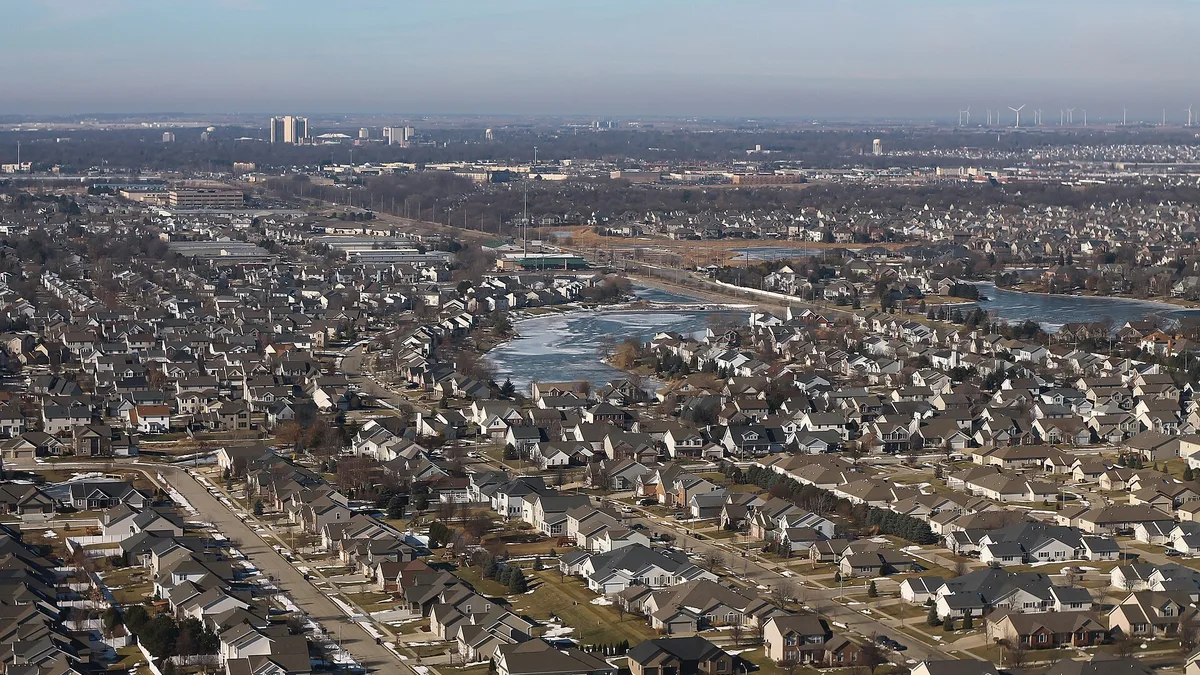
Bloomington, Illinois, seen from the air in 2015 (file photo). Photo: formulanone via Wikimedia Commons, CC BY-SA 2.0
Key points
- An early-morning fire on Friday, Nov. 13, heavily damaged a three-story house split into five apartments in the 300 block of East Locust Street.
- Working smoke alarms woke residents in time, and no one was hurt, but every household in the building was displaced.
- Fire officials said the building's older balloon-frame construction helped the fire climb from the basement to the attic; the cause is under investigation.
Every household in a five-unit apartment house near downtown Bloomington, Illinois, is looking for somewhere else to live after a fire swept through the building early Friday, Nov. 13. Smoke alarms went off in time for everyone to escape, and no injuries were reported.
What happened
Bloomington firefighters were called around 1:30 a.m. to the 300 block of East Locust Street, according to WAND and 25 News Now. The building is a three-story house that had been renovated into five apartments. The first crews to arrive found flames pushing out of a door and a window, 25 News Now reported.
Because of the size of the fire and the layout of the building, the department called for extra help. About 35 firefighters ended up working the scene, WAND reported, with the Normal Fire Department assisting. Crews used thermal imaging cameras to find hidden pockets of fire and to search for anyone who might still be inside.
Deputy Chief Jason Greer said crews met “heavy fire in a complex building” and had to attack it on each of the three floors before it was knocked down.
Why the fire spread
Fire Capt. Frank Friend told 25 News Now that the house uses balloon-frame construction, a method common in older homes in which wall studs run continuously from the foundation to the roof. Without fire blocking between floors, those open wall cavities can act like chimneys. Friend said that is how the fire moved from the basement up to the attic. He also said the renovations that created the separate apartments made the fire harder to fight.
Who was affected
Residents of all five apartments were displaced, and the building sustained significant damage, WAND reported. The American Red Cross was called to assist the residents. 25 News Now reported that some of the tenants had renters insurance. Friend did not say whether the building would be a total loss, and no damage estimate has been released.
Cause
Investigators are still working to determine where and how the fire began. Officials have not announced a cause.
What this means for renters
Large older houses that have been carved into apartments are a major part of the rental stock in many Midwestern cities, and they can carry hidden fire risks. Hidden voids in balloon-frame walls, multiple layers of past renovations and shared basements can let a fire travel between units faster than tenants expect. That is why working smoke alarms, which made the difference on Locust Street, are so important.
- Test your alarms monthly. Illinois requires smoke alarms in every dwelling unit, and newer rules call for long-life sealed-battery alarms when older battery models are replaced. If an alarm is missing or broken, tell your landlord in writing.
- Know two ways out. In converted houses, the second exit may be a back stair or a window onto a porch roof. Make sure windows open and are not painted shut, and ask your landlord about escape ladders for upper floors.
- Ask about the basement. Many fires in older multi-unit houses begin in basements, where furnaces, water heaters, laundry and storage share space. Keep clutter away from appliances and report scorched outlets or tripped breakers.
- Carry renters insurance. A landlord's policy covers the building, not your belongings. Renters coverage typically pays to replace possessions and covers temporary housing if a fire forces you out, often for well under $20 a month.
Displaced tenants should also check their lease and Illinois law on what happens to rent and security deposits when a unit becomes uninhabitable, and keep written records of every conversation with the landlord or property manager.
Sources
Gear that could help
Affiliate linksPractical items related to this story, picked by our editors.
As an Amazon Associate, Renter News earns from qualifying purchases.
An interactive checklist that scores your apartment's fire readiness and tells you what to fix first.
Related stories
More Fire
Forest Park, Ohio apartment fire displaces 18 before dawn
An early Sunday fire at an apartment complex on Passage Way in Forest Park, Ohio, damaged three units and left 18 people displaced. No one was hurt.

South Huntsville Apartment Fire Destroys 16 Units
An early fire at a South Huntsville apartment complex on Meadowbrook Drive displaced residents of 16 units on Oct. 6, the area's second such fire in 10 days.

Somerville Five-Alarm Fire Displaces 43 in Teele Square
A five-alarm fire tore through a mixed-use building in Somerville's Teele Square on Sept. 30, displacing 43 residents from 32 homes. A relief fund is open.